
Compressor vs Desiccant Dehumidifier: Which Works Best in British Homes?
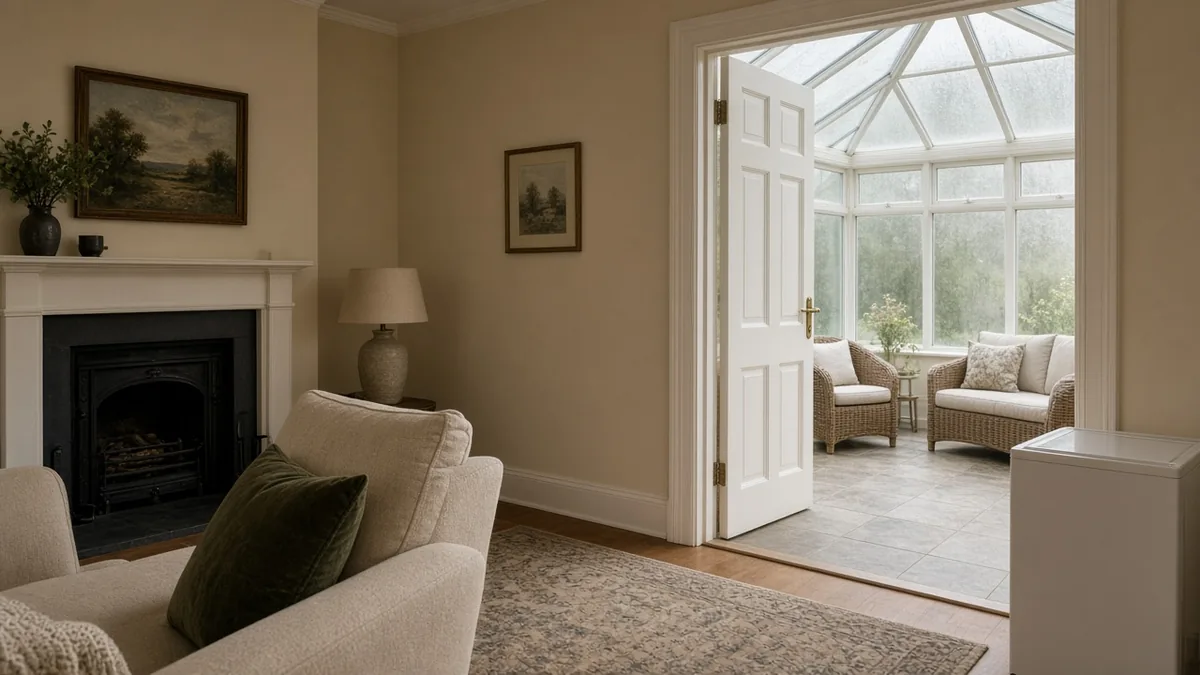
Choose by room temperature: Meaco's rule of thumb is a desiccant below 10°C, a desiccant or large 20L–25L compressor between 10°C and 15°C, and any type above 15°C. Compressors are generally cheaper to run in heated homes (the in-stock 12L models in our dataset draw 151–200 W), while desiccants keep working in cold garages and conservatories (our desiccant models are rated from 1°C) and blow out noticeably warmer air.
Search for a dehumidifier on Amazon UK and you quickly hit two words: compressor and desiccant. Prices overlap, the boxes look similar, and both promise to banish condensation. But they remove water in completely different ways, and picking the wrong one for your room is the most common reason people say their dehumidifier "doesn't collect anything".
This guide compares the two technologies on the factors that matter in British homes: temperature, warmth, noise, weight, power draw and laundry. It is a technology explainer; for detailed pence-per-hour figures across every model, see our running cost guide.
How Each Type Removes Water
Compressor (refrigerant) dehumidifiers
Meaco describes compressor dehumidifiers as the established technology, having been around for more than 50 years. A fan pulls room air across a cold coil; water condenses on it, just as it does on a cold window, and drips into the tank (Meaco: When to buy a desiccant or a compressor dehumidifier). If you have read our dew point guide, this is the same physics, harnessed on purpose.
Desiccant dehumidifiers
A desiccant model has no compressor and no cold surface. Instead, a rotating wheel of absorbent material soaks up moisture from the air, like a sponge, and an internal heater dries the wheel so the cycle repeats (Meaco: What is a desiccant dehumidifier?). Because it does not rely on condensation, its performance does not collapse when the room is cold.
Temperature: The Factor That Decides Everything
Meaco, which says it sells roughly equal numbers of both types, gives this rule of thumb:
| Typical room temperature | Meaco's recommendation | Typical UK spaces |
|---|---|---|
| Below 10°C | Desiccant only | Unheated garage, conservatory in winter, cold lean-to utility |
| 10°C to 15°C | Desiccant, or a large 20L–25L compressor | Cool spare rooms, hallways in older homes, unheated box rooms |
| Above 15°C | Any type, including a small 10L–12L compressor | Heated living rooms, bedrooms, flats |
Why the cut-off? Meaco explains that a compressor's coils need to be colder than the room. As the room approaches 10°C, the inside of the machine gets close to freezing and ice can form; below 10°C, compressor units spend more and more time defrosting. Small compressor units used below 15°C, and large ones used below 10°C, "will not perform well".
There are exceptions. Meaco says its larger Arete One 20L and 25L models performed better than expected at 10°C in Which? testing, and rates its Arete compressors from 5°C. Our dataset reflects that: the Meaco Arete and Pro Breeze compressors are listed with a 5°C minimum, while the EcoAir DC12 MK3 is listed at 15°C. All desiccant models we track are listed from 1°C.
Check the coldest reading in the room, not the average. A conservatory that is 18°C on a sunny afternoon can drop to single figures overnight. A hygrometer such as the ones on our hygrometers page will tell you.
Warm Air: Bonus or Drawback?
Meaco states that air leaving a compressor dehumidifier is about 2°C warmer than the intake, which won't warm the room and can even feel cool because it's moving. Air from a desiccant is about 10–12°C warmer and has a significant effect on room temperature; Meaco describes it as a 2-in-1 dehumidifier and heater.
That warmth is useful in a chilly hallway, a cold back bedroom of a Victorian terrace or a conservatory. It is less welcome in an already warm, well-insulated flat, where you are effectively paying for heat you don't need.
Power Draw and Running Cost
Meaco's own comparison puts its compressor dehumidifiers at 150–260 W and desiccants at around 330 W, both at 20°C and 60% RH. Meaco argues that a desiccant's extra energy comes back as heat, so you may be able to turn your central heating down, but for the lowest running cost in a heated home it rates compressors the winner.
Using wattages from our dataset and the Ofgem cap of 26.32p/kWh for 1 October to 31 December 2026 (Ofgem), with Amazon UK prices checked 26/11/2026 06:17 GMT:
| Model | Type | Rated min temp | Power | Noise | Cost per hour | Price |
|---|---|---|---|---|---|---|
| MeacoDry Arete Two 12L | Compressor | 5°C | 155 W | 35 dB | 4.08p | £199.99 |
| Pro Breeze OmniDry 12L | Compressor | 5°C | 200 W | 36 dB | 5.26p | £118.99 |
| MeacoDry Arete One 20L | Compressor | 5°C | 216 W | 38 dB | 5.69p | £261.00 |
| Meaco DD8L Pro | Desiccant | 1°C | 231 W | 40 dB | 6.08p | £255.97 |
| EcoAir DD1 Simple MK3 | Desiccant | 1°C | Not in our dataset | 34 dB | n/a | £199.98 |
| EcoAir DD2 Simple | Desiccant | 1°C | Not in our dataset | 37 dB | n/a | £219.00 |
Note that the DD8L Pro's listed 231 W is lower than Meaco's general "around 330 W" figure for desiccants; desiccant power varies with fan and heater settings, so check the manufacturer's figure for the mode you will use. We have not calculated costs for the EcoAir desiccants because we do not hold a single verified wattage for them.
Cost per hour is only half the story. A compressor that is stalling in a 7°C garage may run for hours while collecting very little, whereas a desiccant keeps extracting. In a cold space, the cost per litre removed can favour the desiccant even though it draws more power.
Noise, Weight and Practical Differences
- Noise: Meaco says desiccants used to be the quietest option, but modern compressors have caught up; its Arete and ABC 10L–12L compressors are rated at 35–36 dB. In our dataset, the quietest desiccant listed is the EcoAir DD1 Simple MK3 at 34 dB. For bedrooms, see our quiet bedroom picks.
- Weight: Meaco says a compressor adds about 6 kg compared with an equivalent desiccant, though most compressor units have castors. If you will carry it upstairs, a desiccant is easier.
- Sizes: Meaco notes its desiccants come only in 8L, while compressors come in several capacities, which makes it easier to match a compressor to a large house.
- Air purification: Meaco fits H13 HEPA filters to selected compressor models, but not to its desiccants, because restricting airflow can harm a desiccant's heater and sensitive parts.
- Laundry: Both types dry washing well. Meaco says desiccants have higher top-speed airflow and warmer air, while compressors with laundry modes are cheaper to run per load. Our airer vs dehumidifier vs tumble dryer guide covers indoor drying in more depth.
Which Should You Buy? Scenario by Scenario
Heated flat or modern house
Choose a compressor. Rooms sit comfortably above 15°C, so you get the lower running cost and a choice of sizes. New-build owners should also read our guide to drying out a new-build home.
Older home with cool rooms
If bedrooms or hallways hover between 10°C and 15°C in winter, either a desiccant or a 20L–25L compressor with a low rated minimum temperature makes sense. The desiccant's warm output is a bonus in a draughty Victorian terrace.
Unheated garage, workshop or conservatory
Choose a desiccant. Winter temperatures regularly drop below 10°C, where compressors struggle. See our garage dehumidifier picks.
Bedroom used every night
Either type can work if the room is heated; compare noise ratings rather than technology alone.
The Bottom Line
There is no universally better technology, only a better match for the room. Measure the coldest temperature the space reaches, then apply the 10°C and 15°C rule of thumb. For heated living space, a compressor is normally cheaper to run; for cold spaces, a desiccant keeps working when a compressor would spend its time defrosting.
Recommended In-Stock Models & Running Costs
Only models currently in stock on Amazon UK are shown below. Adjust the electricity rate to match your tariff.
| Model | Category | Power | Cost / hr | 8h Cycle | Amazon UK Price | Action |
|---|---|---|---|---|---|---|

Meaco DD8L Pro Desiccant Dehumidifier
8L/day
·
40 dB
|
Desiccants | 231 W | 6.08p/hr | £0.49 | £255.97 90-DAY LOW Price accurate as of 28/11/2026 04:49 GMT | Check price on Amazon |

EcoAir DD1 Simple MK3
7.5L/day
·
34 dB
|
Desiccants | — | — | — | £199.98 90-DAY LOW Price accurate as of 28/11/2026 04:49 GMT | Check price on Amazon |

EcoAir DD2 Simple
9L/day
·
37 dB
|
Desiccants | — | — | — | £219.00 90-DAY LOW Price accurate as of 28/11/2026 04:49 GMT | Check price on Amazon |

Meaco MeacoDry Arete One 20L Dehumidifier / Air Purifier
20L/day
·
38 dB
|
Compressors | 216 W | 5.69p/hr | £0.45 | £261.00 90-DAY LOW Price accurate as of 28/11/2026 04:49 GMT | Check price on Amazon |

Meaco MeacoDry Arete Two 12L Dehumidifier / Air Purifier
12L/day
·
35 dB
|
Compressors | 155 W | 4.08p/hr | £0.33 | £199.99 90-DAY LOW Price accurate as of 28/11/2026 04:49 GMT | Check price on Amazon |

Pro Breeze OmniDry 12L Quiet Dehumidifier with Max Extraction
12L/day
·
36 dB
|
Compressors | 200 W | 5.26p/hr | £0.42 | £118.99 90-DAY LOW Price accurate as of 28/11/2026 04:49 GMT | Check price on Amazon |
Product prices and availability are accurate as of the date/time indicated and are subject to change. Any price and availability information displayed on Amazon.co.uk at the time of purchase will apply to the purchase of this product.
Frequently Asked Questions
Why does a compressor dehumidifier stop working in a cold room?
A compressor dehumidifier condenses water on coils that must be colder than the room. Meaco explains that as the room falls towards 10°C the coils get close to freezing, ice can form, and below 10°C compressor units spend more and more of their time defrosting rather than dehumidifying.
Does a desiccant dehumidifier heat the room?
Yes, a little. Meaco says air leaving a desiccant dehumidifier is about 10–12°C warmer than the air going in, which noticeably warms the room, while air from a compressor unit is only about 2°C warmer and will not warm the room. That extra heat comes from the electricity a desiccant uses to regenerate its wheel.
Which type is cheaper to run?
In a heated home, usually a compressor. Meaco quotes 150–260 W for its compressor range and around 330 W for desiccants at 20°C and 60% RH. At the Ofgem cap of 26.32p/kWh, the 155 W MeacoDry Arete Two 12L costs about 4.08p per hour and the 231 W Meaco DD8L Pro about 6.08p per hour. In a cold room, a desiccant can be better value because it keeps extracting when a compressor stalls.
Which type is better for drying laundry?
Both work. Meaco notes desiccants tend to have a higher top-speed airflow and warmer air, giving them an edge on drying speed, while compressors with laundry modes are cheaper to run and can dry a load at lower cost.
More UK Damp & Running-Cost Guides
Why Condensation Forms on the Inside of UK Windows (Dew Point Explained)
Condensation forms on the inside of a window when the glass is colder than the dew point of the room air, so water vapour turns back into droplets on it. At 20°C and 60% relative humidity the dew point is roughly 12°C, so any pane or frame colder than about 12°C will mist up. Bringing the dew point down (less moisture, more ventilation, a dehumidifier) or warming the glass is the only way to stop it.
How to Clean Black Mould Safely Without Spreading Spores Around Your Home
Wear gloves, goggles and a mask over your nose and mouth, open the window but close the door to the rest of the house, then wipe the mould while it is wet using a mould and mildew product (GOV.UK advises these in preference to bleach) and a disposable cloth. Never brush, dry-wipe or vacuum mould. Bag the cloth and mask afterwards, and leave patches larger than about 1 m², or mould caused by leaks, to a professional or your landlord.
New-Build Homes in the UK: Drying Out Construction Moisture in Year One
NHBC says up to 8,000 litres of water can go into building a new home, and that a new home should reach a moisture-balanced state within 18 months to 2 years. Because modern homes are insulated and draught-proofed, that moisture and everyday steam escape slowly, so keep trickle vents open, run extractors, heat evenly rather than hot, avoid drying clothes on radiators, and use a dehumidifier if condensation persists. Ongoing damp or mould is not normal and should be reported to your builder.